
From Figma to WordPress: How I Built the Prestum Insurance Website Using HTML, CSS, JS and PHP
Converting a Figma design into a fully functional WordPress website — without relying on page builders — is one of the most in-demand skills in modern web development. This case...
Destaques da Arquitetura:
- PageSpeed 100/100
- LCP < 1.2s
- SEO Técnico
- Mobile First
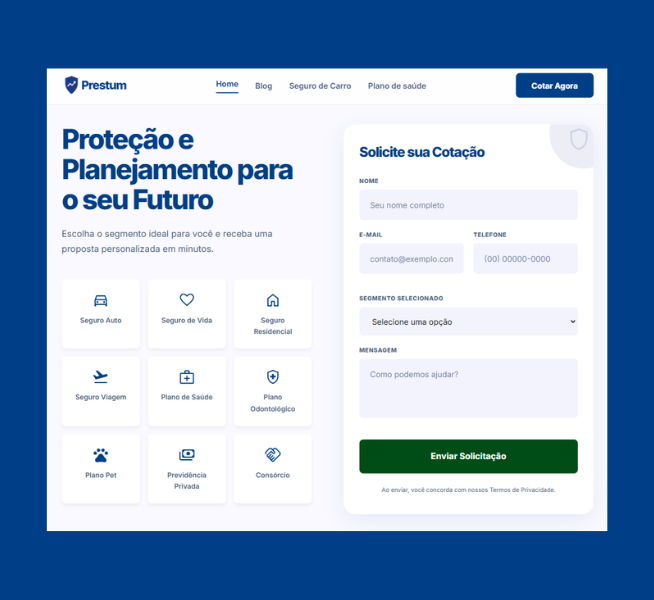
Converting a Figma design into a fully functional WordPress website — without relying on page builders — is one of the most in-demand skills in modern web development. This case study details how I developed Prestum, a Brazilian insurance quotation platform, transforming a detailed Figma layout into a clean, high-performance WordPress theme, built entirely with HTML, CSS, JavaScript, PHP, and ACF.
About the project
Prestum is a digital platform focused on insurance and financial planning, connecting users to auto, life, home, health, travel, and dental insurance products. The goal was to bring the Figma design to life as a fully customized WordPress site — pixel-perfect, fast, and easy for the client to manage — without any dependency on visual builders like Elementor or Divi.
Developing with pure code — without a page builder — keeps the generated HTML clean, the codebase maintainable, and the performance scores high. ACF was used to make the content editable by the client without the need to touch the code directly.
From Figma to code: the process
The workflow followed a structured approach to ensure design fidelity and technical quality:
- Design audit in Figma — typography, spacing, components, and breakpoints
- Custom WordPress theme built from scratch with template hierarchy
- Semantic HTML/CSS components with a focus on accessibility
- Vanilla JavaScript interactions: quotation form, testimonials slider, FAQ accordion
- ACF integration for fully editable custom fields
- Image optimization, lazy loading, and asset minification
Performance results (PageSpeed Insights — mobile)
The final scores in the PageSpeed Insights mobile audit show what pure-code WordPress development can achieve when done correctly:
96
Performance
96
Accessibility
100
Best Practices
100
SEO
Core Web Vitals: First Contentful Paint at 0.9s, Largest Contentful Paint at 1.6s, and Total Blocking Time at 180ms — all in the green range according to Google’s metrics.
Developed sections
- Hero with quotation form — custom fields for segment selection and lead submission
- Insurance categories grid — SVG icons with product type navigation
- Why choose us — benefit cards highlighting the platform’s differentiators
- Testimonials carousel — client reviews with CSS-based slider
- FAQ accordion — animated expand/collapse with pure CSS transitions
- Content blog — category-filtered article listing
- Full footer — quick links, social icons, and institutional text
Why convert Figma to WordPress without a page builder?
Many clients arrive with a highly polished Figma file and need a developer who can translate it into real, production-ready code. The pure-code Figma to WordPress conversion service offers clear advantages over visual builder solutions:
- Clean HTML output free of dependencies
- Significantly higher performance — especially on mobile
- Pixel-perfect fidelity to the original design
- Easier long-term maintenance and lower hosting costs
- Zero risk of plugin conflicts from builder frameworks
Final thoughts
The Prestum project is a concrete example of how a Figma to WordPress conversion, executed with attention to clean code and best practices, delivers a professional-grade product — fast, accessible, and well-ranked in search engines. If you have a Figma design and need custom WordPress development, feel free to get in touch.